Buckeyes in Action: Misti Allison ’11 MPH leads with heart in East Palestine
Public health alum embraces community advocacy after train derailment
By Kristen Mitchell
Misti Allison ‘11 MPH was putting her children to bed when the texts started coming in — a train had derailed about a mile from her home in East Palestine, Ohio. When she saw a photo of the raging fire and clouds of dark smoke, she realized her family was in danger.
The Norfolk Southern train was carrying vinyl chloride, a volatile gas that could cause an explosion if not contained. As the fire continued to burn over the next few days, responders initiated a controlled release and burn — a controversial decision experts say exposed residents unnecessarily to the cancer-linked substance.
It had been years since Allison completed her Master of Public Health at Ohio State, but she found herself pouring over environmental data and keeping tabs on the nose bleeds, rashes and headaches her friends and family were experiencing. Her career had shifted to product marketing in recent years, but her passion for community health was unchanged.
“This was a public health crisis, a public health emergency, and I don’t think anybody in our small community had a public health background other than me,” she said. “So, it was really like, if not me, then who?”
Her northeast Ohio village changed forever on Feb. 3, 2023. So did she.
Finding her voice
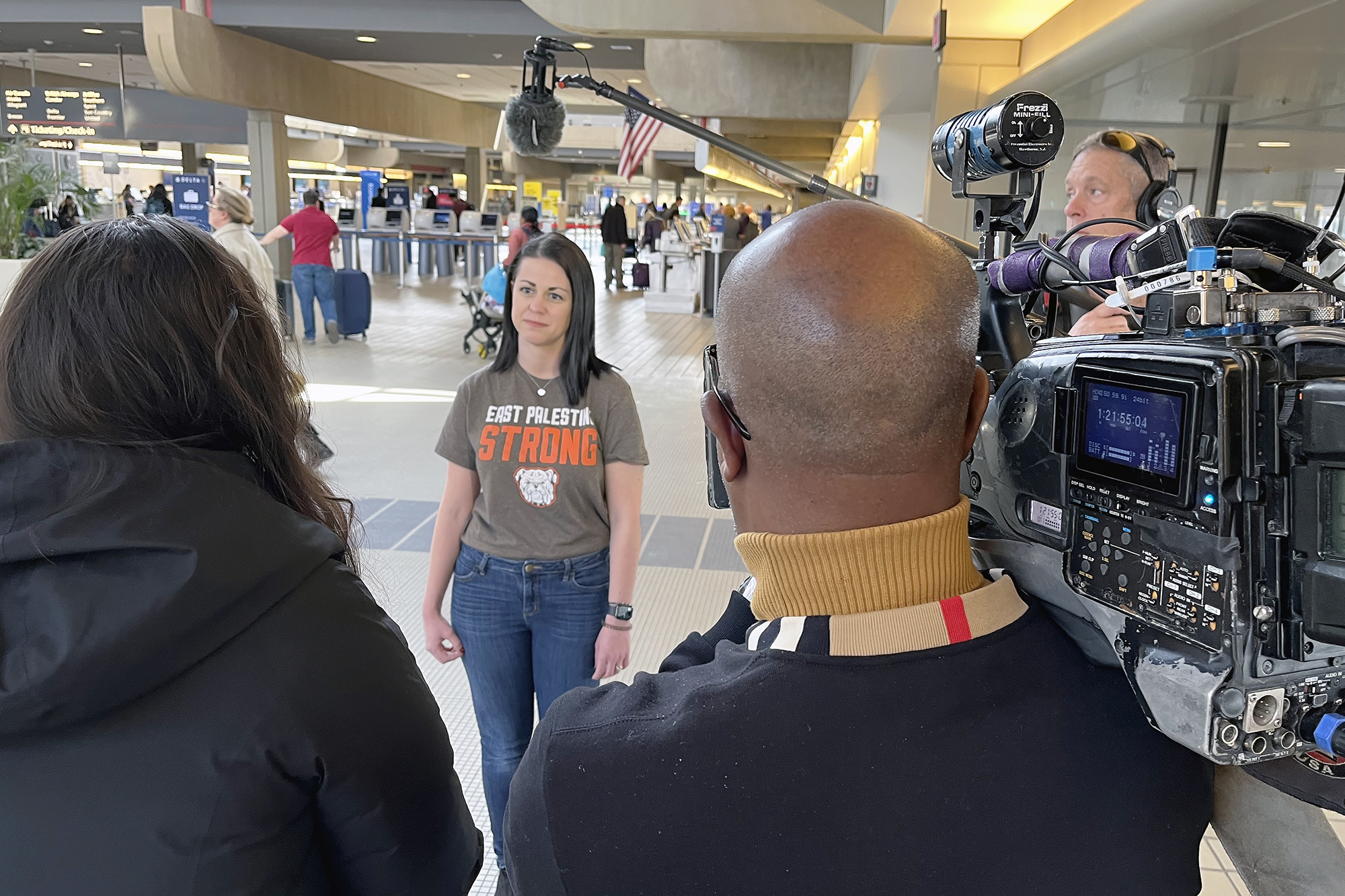
Allison’s advocacy started with an Instagram message to a journalist who was looking to talk with someone who lived in East Palestine. The interview went viral and soon she was asked to do more interviews and participate in a televised meeting with U.S. Environmental Protection Agency officials and Gov. Mike DeWine.
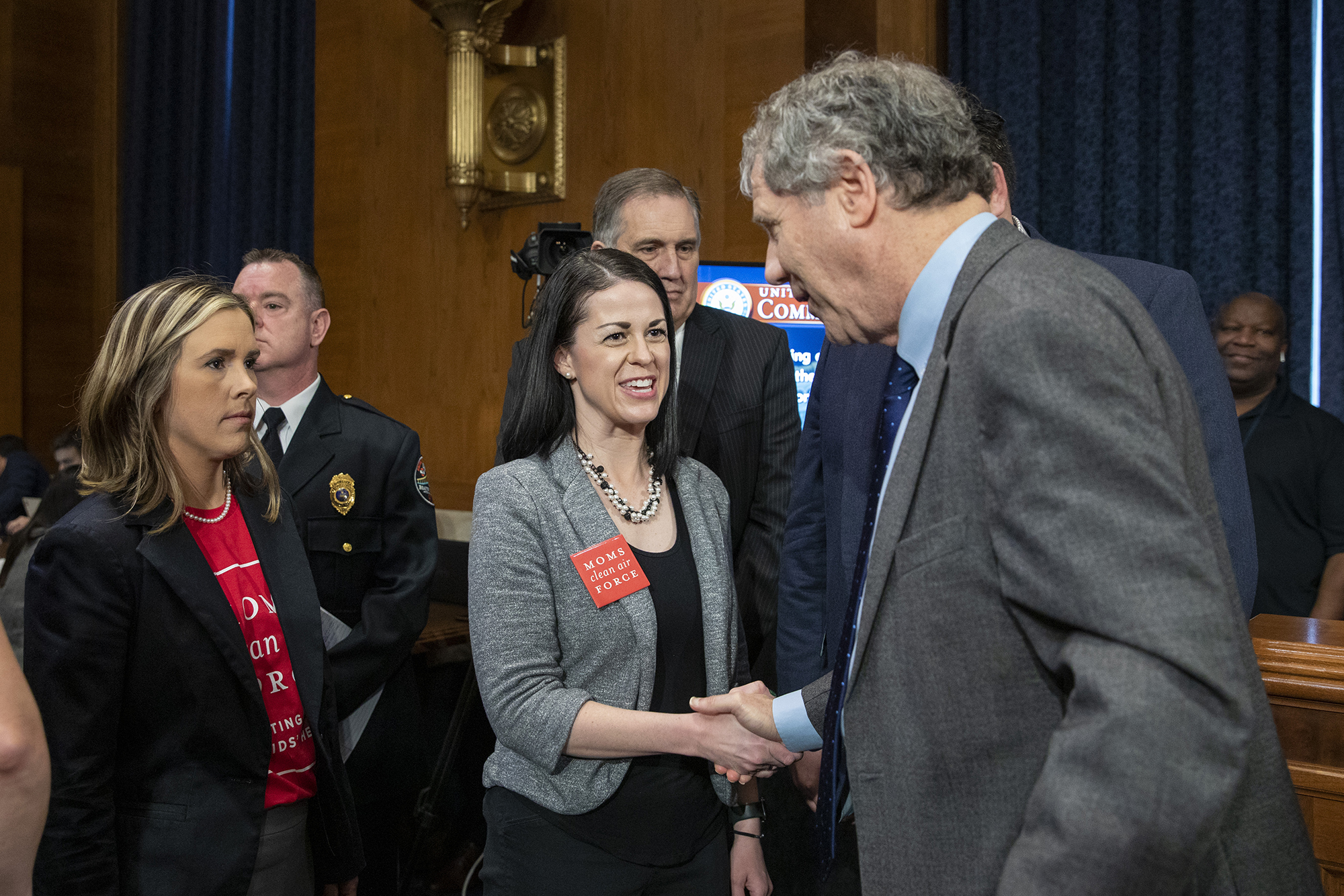
Less than two months later, she found herself testifying before the U.S. Senate Committee on Commerce, Science, and Transportation alongside lawmakers and environmental experts. She made an emotional appeal detailing her 7-year-old son’s fear of dying and the need for accountability from Norfolk Southern.
“I really wanted to pull on heartstrings — for people to know this isn’t a political issue, this is a people issue,” she said. “Trains should not be derailing in towns…the choice should not be made to just totally detonate highly carcinogenic materials that can impact the lives of so many people for decades.”
As the immediate disaster response faded and the national news crews left town, Allison dug into research. She now leads a community advisory board for the East Palestine Train Derailment Health Research Program, which aims to assess the long-term health of people living in and near East Palestine. Residents have reported new heart problems, cancer and other unexpected ailments during the last three years.
Ohio State College of Public Health Professor Darryl B. Hood is a consultant on the project led by researchers from the University of Kentucky, University of Pittsburgh and Yale University. Their goal is to develop interventions that help protect environmental and human health during future derailments, Hood said.
The research group held a series of community forums earlier this year, giving residents an opportunity to share their concerns — an experience Hood described as heart-wrenching and unlike anything he has experienced in his 35 years in the field.
“The impacts that have befallen this community due to this train derailment are generational,” Hood said, explaining that public health fallout is likely to carry on long after the immediate years following the disaster. “The people of East Palestine need answers, so that’s our job.”
Allison is the “ultimate advocate” for her community, Hood said. Her public health training and trust within her community enables her to connect with residents, researchers, policymakers and more.
“That is everything — you don’t find that very often,” he said.
Hood received funds from CPH supporters Phyllis Cummins '73 BS and Donald Dyche to start building a model to predict how the environmental effects of the derailment cost exposed community members years of healthy life, based on autopsy findings and other health data.
Village Manager Antonio Diaz-Guy said Allison understands what is important to the community and, critically, is accountable to residents.
“There is a certain level of trust that is built just by repetitive exposure and proximity, because you’re not going to lie to me if I see you every day,” he said. “That’s not achievable from an organization three hours away or 13 hours away,” he said.
Facing the unknown
Allison said Ohio State helped prepare her to be a leader, reinforcing a service-oriented mindset that has carried her far beyond what she learned in the classroom. She encourages students to be open to new opportunities that can take them to unexpected places.
As a 2026 Presidential Leadership Scholar, Allison is developing The Disaster Voices Institute, an organization she hopes will help communities that experience floods, wildfires, train derailments and other disasters. Her goal is to create a space for sharing their experiences and help drive change through research and policy reform, she said.
“(In East Palestine), we all went through the same disaster,” she said. “But everybody has their own unique story.”
Allison wants to ensure what happened in East Palestine is a catalyst for positive change, she said. So long as there is public health work to do in East Palestine, she will be part of it.
“It’s really just part of my identity now,” she said. “I owe it to myself and to my children and to my community to see this through.”
Editor’s note:
Every day, dedicated faculty, students, staff and alumni of the College of Public Health are impacting the well-being of communities locally, nationally and around the world. Our Buckeyes are passionate leaders and advocates committed to ensuring all people have the opportunity to thrive. “Buckeyes in Action” showcases the multitude of ways our community is driving public health forward in tangible, immediate ways.