Meet Robin Puett, the epidemiologist leading CPH’s research enterprise
Associate Dean for Research shares vision, excitement about college’s future
By Misti Crane
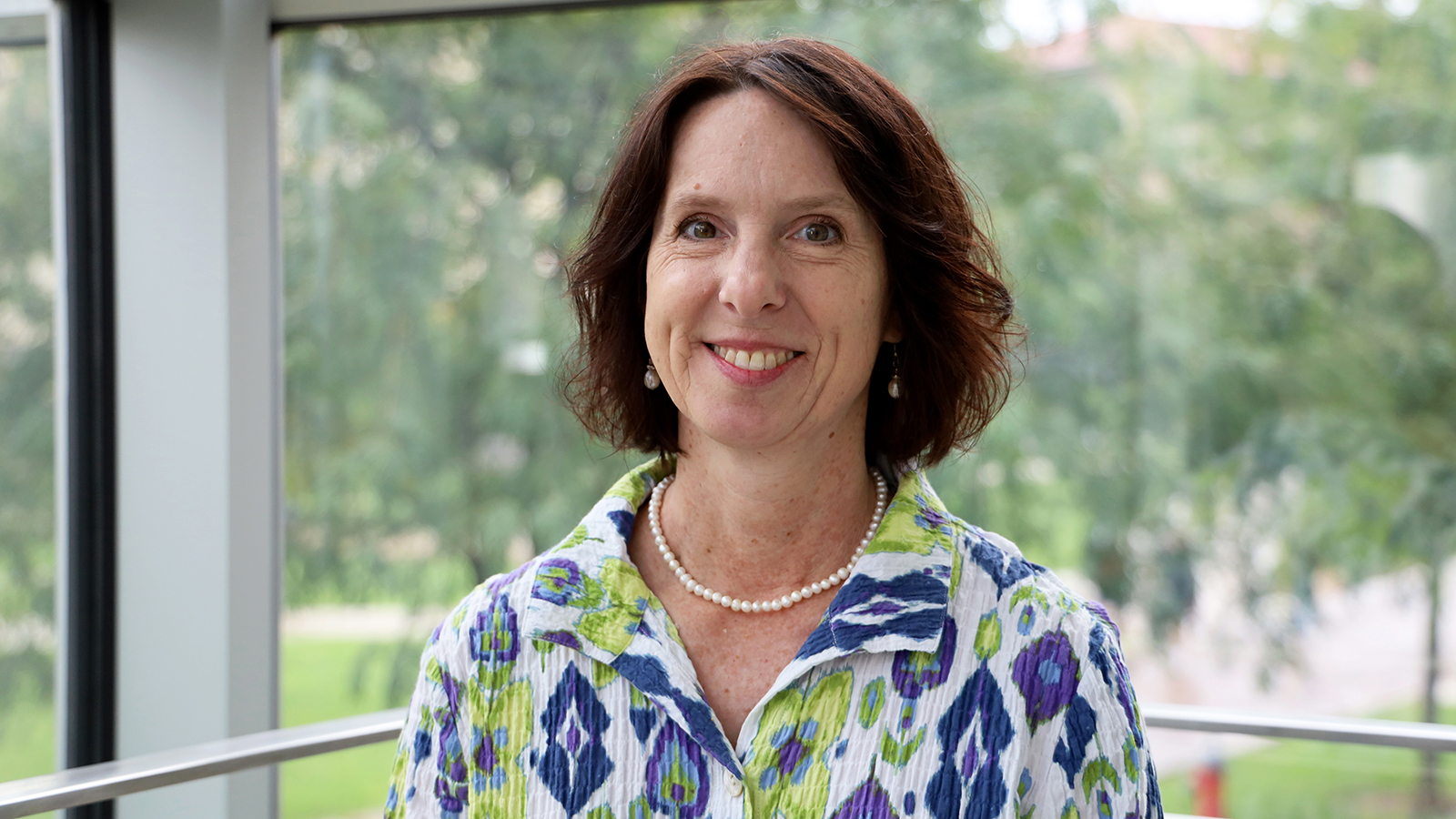
Robin Puett joined the College of Public Health this summer as the Associate Dean for Research. She was previously at the University of Maryland School of Public Health, where she served as associate dean for research and faculty affairs. Puett holds doctoral degrees in environmental health sciences and epidemiology from the University of South Carolina and completed postdoctoral training at Harvard T.H. Chan School of Public Health.
Her research
Puett is an environmental epidemiologist who studies how the environment affects health. Her past research has looked at how air pollution may contribute to chronic diseases such as heart disease and diabetes, as well as early death. She also studies why some people face greater health risks when they experience various environmental exposures. More recently, her work has expanded to include integrative health approaches such as yoga and meditation, and ways to build resilience to stress.
“I’m eager to see where my personal research interests will fit in and complement the excellent work of scientists in the college and throughout Ohio State,” Puett said.
What excites her about joining the Ohio state team
Puett said she’s most excited about the passion she’s seen among faculty — not just for advancing their work, but for serving the community and helping Ohioans live healthier, fuller lives.
“They look for opportunities to take advantage of the latest scientific advances, while giving consideration to how to responsibly and meaningfully bring these advances into the community.”
Navigating today’s complex funding landscape
“It’s a complicated and evolving time on many fronts — from what topics are being funded, to how the science is being reviewed, to which organizations are positioned to support public health’s work,” Puett said.
While she doesn’t downplay the struggles many in the field are facing, Puett said she sees opportunity, both in terms of looking for support from new organizations and being creative about how to keep important research moving forward.
“We are fortunate, because many of our faculty have a deep history of engaging with the community and government to help solve challenging public health problems. Be it seeking out foundations to partner with, creating public-private partnerships or finding other sources of funding from those who value public health, I am confident in our future,” she said.
Puett has already been instrumental in developing a partnership with Ohio State’s College of Medicine to award annual seed grants for projects where faculty from both colleges partner.
Supported by the Karkut Endowment Fund and the offices of research in both colleges, the program will award grants to help faculty explore new research directions, build partnerships and lay the groundwork for future funding. For the inaugural year, three seed grants of up to $30,000 each will be awarded.
“We hope these early investments will lead to strong, ongoing collaborations and additional external funding in the future,” she said.
Public health research to keep an eye on
Puett said she is excited about the potential for AI to advance science but is quick to acknowledge that one of public health’s important roles is to be a leader in studying and championing responsible use of the technology.
“It’s important to balance enthusiasm with caution and evidence,” she said.
Beyond AI: “This might not seem new – but now, more than ever, we need to be focused on helping our communities meet the current challenges in their lives,” Puett said.
“That means focusing on affordable nutrition, sexual and reproductive health and addressing environmental factors, from pollution to extreme weather events, that threaten our health. And, as always, public health is deeply concerned with how these factors disproportionately harm some populations.”