Dongjun Chung, PhD
Professor
(Courtesy)
Biostatistics
Biography
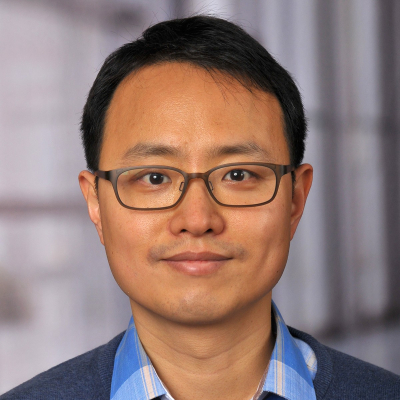
Dr. Chung is a professor and the division chief of Bioinformatics and Computational Biology in the Department of Biomedical Informatics at The Ohio State University. He is also a faculty member of Ohio State's Interdisciplinary PhD Program in Biostatistics, the director of the Biomedical Informatics Shared Resource at The Ohio State University Comprehensive Cancer Center – Arthur G. James Cancer Hospital and Richard J. Solove Research Institute, and a member of the Center for Artificial Intelligence and Bioinformatics in Immuno-Oncology within the Pelotonia Institute for Immuno-Oncology.
Dr. Chung received a PhD in statistics from the University of Wisconsin-Madison under the mentorship of Dr. Sunduz Keles, and postdoctoral training in bioinformatics/biostatistics at Yale University under the supervision of Dr. Hongyu Zhao. His research group has developed statistical and machine learning models for high-dimensional genomic data analysis, biomedical big data mining and integrative analysis of these datasets. Dr. Chung has published more than 120 research papers in leading bioinformatics and biostatistics journals, which have been cited more than 5,800 times in the past five years. Dr. Chung has also served as the principal investigator leading multiple National Institutes of Health funded research projects.
Education
- Postdoc
- Biostatistics/Bioinformatics, Yale University, 2014
- PhD
- Statistics, University of Wisconsin-Madison, 2012
Research interests
Statistical and machine learning methods for the analysis of high-dimensional genomic data, especially spatial and single-cell multi-omics; statistical genetics; Statistical and machine learning methods for the integrative analysis of genomic data with biomedical big data.
Select publications
- Jeon Y, Park J, Jin IH, and Chung D (2025), "Network-based topic structure visualization," Journal of Applied Statistics, 2: 509-523.
- Allen C, Chang Y, Neelon B, Chang W, Kim HJ, Li Z, Ma Q, and Chung D (2023), "A Bayesian multivariate mixture model for high-throughput spatial transcriptomics," Biometrics, 79: 1775–1787.
- Xie J, Jeon H, Xin G, Ma Q, and Chung D (2023), "LRT: Integrative analysis of scRNA-seq and scTCR-seq data to investigate clonal differentiation heterogeneity," PLOS Computational Biology, 19(7): e1011300.
- Sun Z, Chung D, Neelon B, Millar-Wilson A, Ethier SP, Xiao F, Zheng Y, Wallace K, and Hardiman G (2023), "A Bayesian framework for pathway-guided identification of cancer subgroups by integrating multiple types of genomic data," Statistics in Medicine, 42(28): 5266-5284.
- Deng Q, Gupta A, Jeon H, Nam JH, Yilmaz AS, Chang W, Pietrzak M, Li L, Kim HJ, and Chung D (2023), "graph-GPA 2.0: A graphical model for multi-disease analysis of GWAS results with integration of functional annotation data," Frontiers in Genetics, 14: 1079198.
- Kwon H, Schafer JM, Song NJ, Kaneko S, Li A, Xiao T, Ma A, Allen C, Das K, Zhou L, Riesenberg B, Chang Y, Weltge P, Velegraki M, Oh DY, Fong L, Ma Q, Sundi D, Chung D, Li X, and Li Z (2022), "Androgen conspires with the CD8+ T cell exhaustion program and contributes to sex bias in cancer," Science Immunology, 7(73): eabq2630.
- Khatiwada A, Wolf BJ, Yilmaz AS, Ramos PS, Pietrzak M, Lawson A, Hunt KJ, Kim HJ, and Chung D (2021), "GPA-Tree: Statistical approach for functional-annotation-tree-guided prioritization of GWAS results," Bioinformatics, 38: 1067-1074.
- Kim HJ, Yu Z, Lawson A, Zhao H, and Chung D (2018), "Improving SNP prioritization and pleiotropic architecture estimation by incorporating prior knowledge using graph-GPA," Bioinformatics, 34(12): 2139–2141.
- Chung D and Kim H (2015), “Accurate ensemble pruning with PL-Bagging,” Computational Statistics and Data Analysis, 83: 1-13.
- Chung D, Yang C, Li C, Gelernter J, and Zhao H (2014), “GPA: A statistical approach to prioritizing GWAS results by integrating pleiotropy information and annotation data.” PLoS Genetics, 10(11): e1004787.