Fernanda Schumacher receives Institute for Population Research seed grant
Project focuses on uncertainty in epigenetic clock predictions
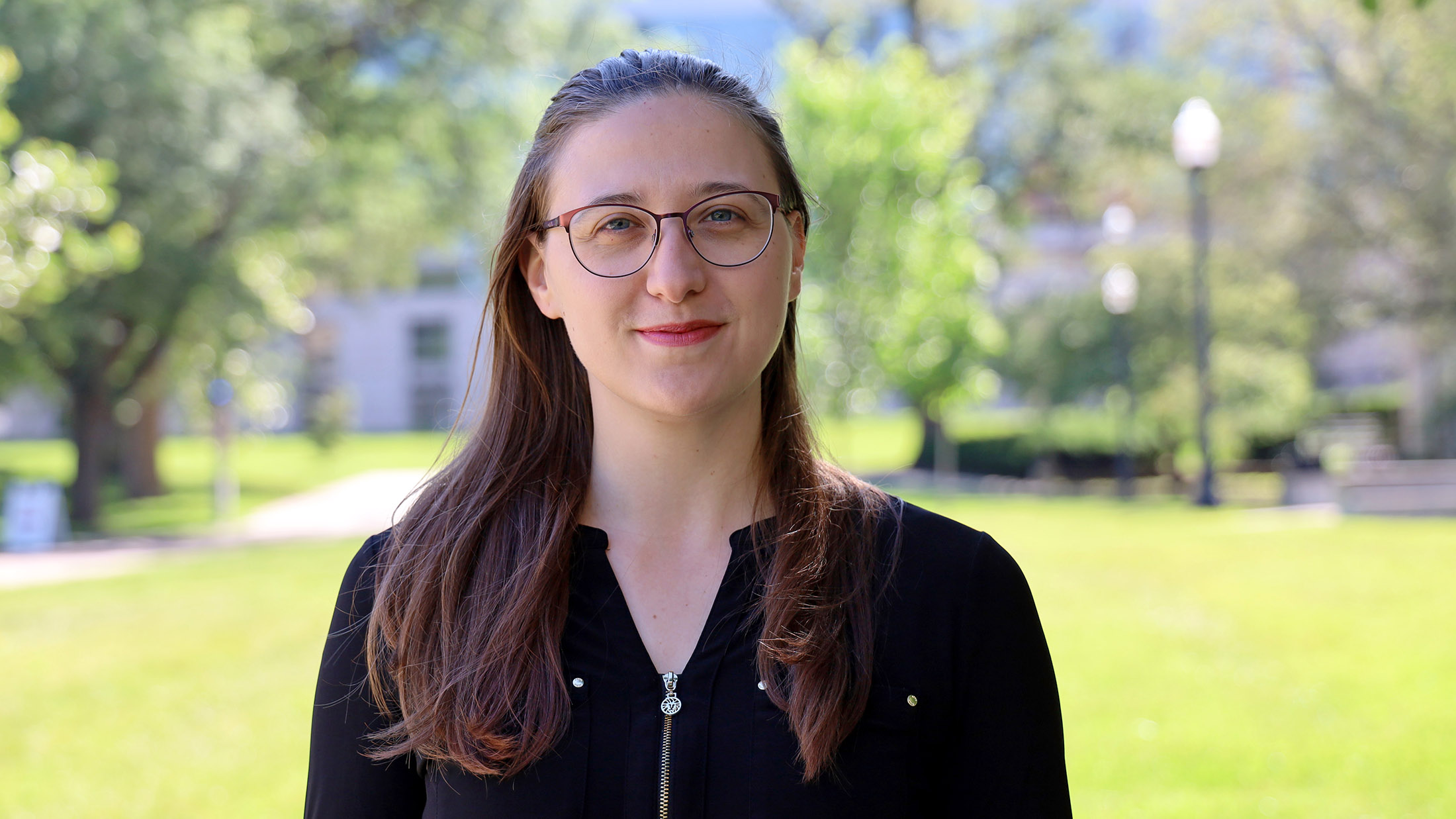
Assistant Professor Fernanda Schumacher received a $40,000 seed grant from the College of Arts and Sciences Institute for Population Research to support her project “More Than a Number: Bayesian Frameworks for Uncertainty Propagation on Epigenetic Clock Predictions.”
Epigenetic clocks are DNA methylation-based tools increasingly used to estimate biological age and study population-level differences in health, aging and social determinants of health. Despite being derived from high-dimensional machine learning models, their predictions are routinely treated as error-free measurements in scientific analyses, which could contribute to misleading information when comparing subgroups in the study and inflate false-positive findings, Schumacher said.
This project develops a Bayesian framework to quantify and propagate that prediction uncertainty into population-level subgroup comparisons, Schumacher said. She hopes this project will lead to a future larger study that extends the framework to more complex, multivariate biological aging clocks.