Yuzi Zhang, PhD
Assistant Professor
Biostatistics
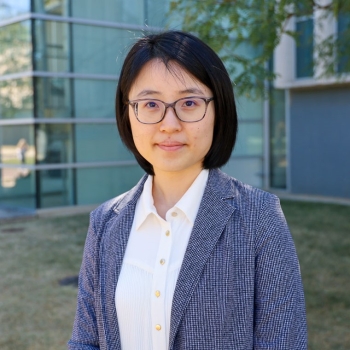
“In this data-rich world, with the increasing ability to acquire data from diverse sources, my work as a biostatistician motivates me to develop statistical methods for real-world challenges. I am excited to contribute to the shared goal of advancing public health.””
Biography
Dr. Zhang's research primarily focuses on two areas. Firstly, she is actively engaged in developing statistical methods for environmental epidemiological studies, particularly in assessing health effects of environmental exposures. Secondly, her research centers on disease surveillance, with a specific focus on capture-recapture methods. She is also interested in mediation analysis with applications to metabolomics data.
Education
- Ph.D.
- Biostatistics, Emory University, 2023
- MSPH
- Biostatistics, Emory University, 2018
- B.E.
- Biopharmaceutical Technology, China Pharmaceutical University, 2016
Research interests
Statistical methodology: environmental epidemiology, capture-recapture methods for disease surveillance, Bayesian methods, spatial-temporal modeling. Applications: infectious disease, Alzheimer’s disease, pre-term birth
Select publications
- Zhang Y, Warren JL, Hao H, Chang HH (2025). Time-to-event analysis of preterm birth accounting for gestational age uncertainties. The Annals of Applied Statistics, 19(3), 2155-2170, DOI: 10.1214/25-AOAS2040.
- Zhang Y, Lyles RH (2025). New capture-recapture models of behavioral response for estimating the size of a closed animal population. Journal of Agricultural, Biological and Environmental Statistics, 1-18, DOI: 10.1007/s13253-025-00701-w
- Zhang, Y., Ge, L., Waller, L. A., Shah, S., & Lyles, R. H. A capture-recapture modeling framework emphasizing expert opinion in disease surveillance. Statistical Methods in Medical Research. 2024;0(0). https://doi.org/10.1177/09622802241254217
- Zhang, Y., Chang, H. H., Warren, J. L., & Ebelt, S. T. (2024). A scalar-on-quantile-function approach for estimating short-term health effects of environmental exposures. Biometrics, 80(1), ujae008. https://doi.org/10.1093/biomtc/ujae008
- Zhang Y, Chang HH, Iuliano AD, Reed C (2024). A Bayesian spatial-temporal varying coefficients model for estimating excess deaths associated with respiratory infections. Journal of the Royal Statistical Society Series A: Statistics in Society, 2024 Aug 19:qnae079, DOI: 10.1093/jrsssa/qnae079 (Associated R package NBRegAD is available on GitHub)
- Zhang, Y., Ge, L., Waller, L. A., & Lyles, R. H. (2023). On some pitfalls of the log-linear modeling framework for capture-recapture studies in disease surveillance. Epidemiologic Methods, 12(s1), 20230019. https://doi.org/10.1515/em-2023-0019
- Zhang, Y., Chen, J., Ge, L., Williamson, J. M., Waller, L. A., & Lyles, R. H. (2023). Sensitivity and uncertainty analysis for two-stream capture–recapture methods in disease surveillance. Epidemiology, 34(4), 601-610. https://doi.org/10.1097/EDE.0000000000001614
- Zhang, Y., Chang, H. H., Cheng, Q., Collender, P. A., Li, T., He, J., & Remais, J. V. (2023). A hierarchical model for analyzing multisite individual-level disease surveillance data from multiple systems. Biometrics, 79(2), 1507-1519. https://doi.org/10.1111/biom.13647
- Zhang, Y., Ebelt, S. T., Shi, L., Scovronick, N. C., D'Souza, R. R., Steenland, K., & Chang, H. H. (2023). Short-term associations between warm-season ambient temperature and emergency department visits for Alzheimer's disease and related dementia in five US states. Environmental research, 220, 115176. https://doi.org/10.1016/j.envres.2022.115176
- Zhang, Y., Chang, H. H., Iuliano, A. D., & Reed, C. (2022). Application of Bayesian spatial-temporal models for estimating unrecognized COVID-19 deaths in the United States. Spatial statistics, 50, 100584. https://doi.org/10.1016/j.spasta.2021.100584