Public Health Buckeyes: Jacob Kamholz
Paramedic career inspires PhD student’s health policy mission
By Kristen Mitchell
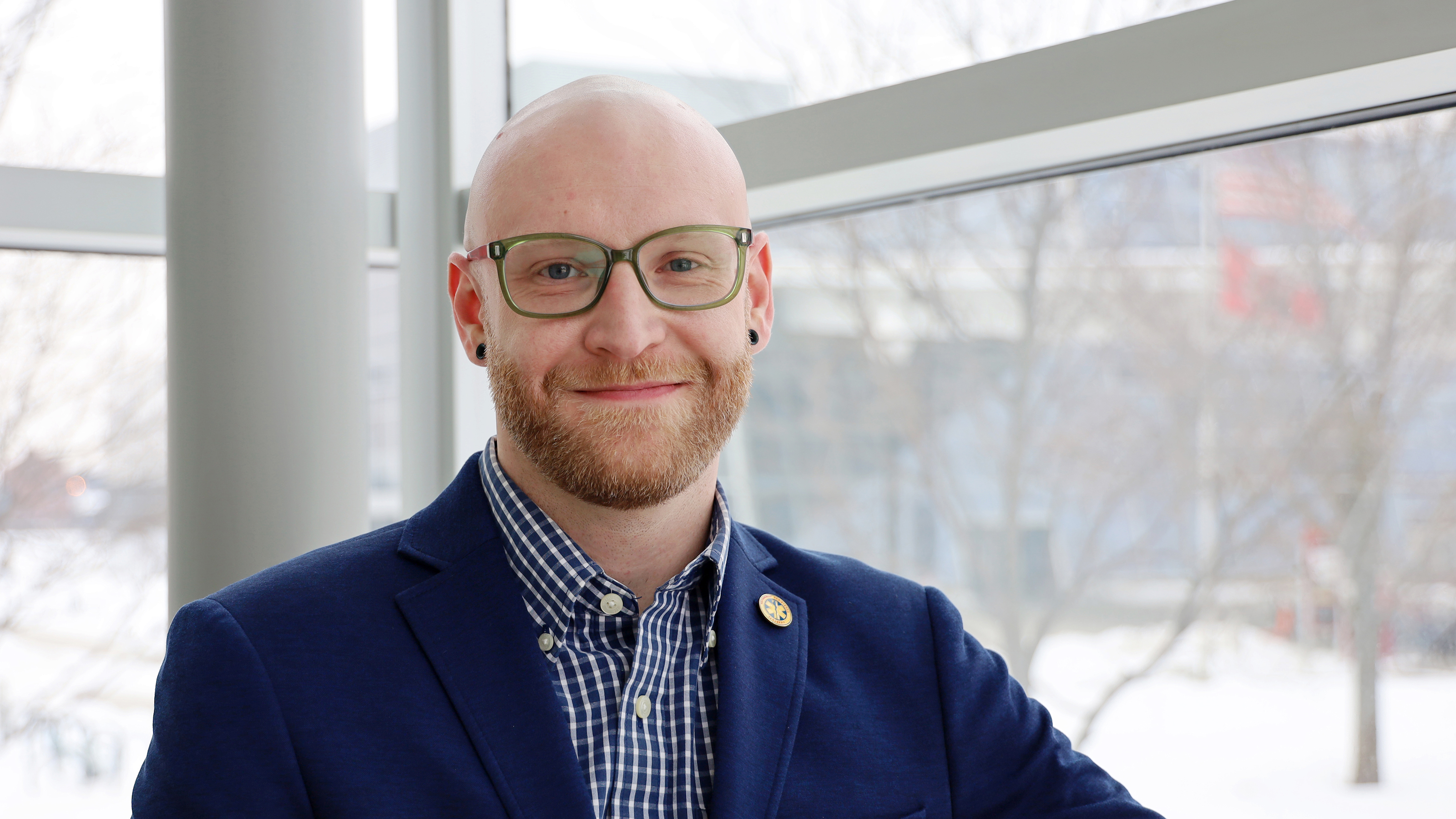
For Jacob Kamholz '24 MPH, being a paramedic meant fast-paced days helping his community, meeting new people and spending a lot of time outdoors. But his experience also taught him how access to reliable and timely emergency medical services could vary depending on your zip code.
Kamholz was motivated to pursue a PhD in health services management and policy, where he is focused on fostering accessible and sustainable emergency medical care nationwide.
Question:
What inspired you to become a paramedic?
As an undergraduate, I was drawn to a career centered on caring for people and initially considered medical school. After my first year, I transferred to the University of Pittsburgh, where I took an emergency medical technician (EMT) course and loved it! I quickly learned that I could receive the education to become a paramedic as part of my bachelor's degree requirements (i.e., make Mom happy) and decided to try out this new pathway in medicine before committing to a career in health care.
I fell in love with the high pace and criticality of answering people’s 911 calls. That feeling of providing a little bit of help on their worst day was incredibly rewarding.
Question:
How have your experiences as a paramedic steered your interest in health policy?
Working as a paramedic in multiple states and across different EMS agency types (governmental non-fire, private and nonprofit) showed me how varied emergency care access can be. As a public servant in communities ranging from major cities to small townships, I saw firsthand that 911 services are not funded, staffed or supported equally. Despite my expectation that emergency care should be timely and reliable everywhere, the reality differs widely. Those experiences were my first exposure to health policy as a major driver of EMS systems. They motivated me to pursue a career focused on strengthening EMS delivery across all communities.
Question:
What are the big questions that guide your work?
A central question is how we build and maintain a strong EMS workforce that is appropriately distributed across regions. As 911 call volume continues to rise by millions of activations each year, some areas are facing a new public health challenge known as “ambulance deserts,” regions where EMS stations are more than 25 minutes away.
I am also interested in EMS as a public health surveillance resource. Patterns in EMS utilization can provide valuable insight into community health interventions, including bystander CPR and naloxone use, as well as the impact of services like the 988 crisis lifeline.
Question:
Is there anything that has surprised you about your experience as a PhD student?
The amount of reading, wow! At the same time, I have been fortunate to begin research work immediately through my role on the highly collaborative team at the National Registry of EMTs. The National Registry has a strong history of supporting doctoral training at the College of Public Health, particularly in epidemiology, and I am proud to be the first PhD student they have supported through the Division of Health Services Management and Policy. I’m especially encouraged by the opportunity to pair policy training with research skills that can strengthen EMS systems. I have also been struck by how limited the dedicated EMS research landscape is, despite being a critical aspect of health care. That gap reinforces the importance of my efforts to connect policy, research and practice.
Question:
What do you enjoy most about being a CPH student?
Not to be cliché, but I’ve most enjoyed the sense of community within the College of Public Health. EMS is still a relatively young area in academic research, and I have appreciated how open and supportive faculty and students have been in engaging with my perspective from the field. People are genuinely willing to listen, ask thoughtful questions and help me connect real-world EMS challenges to broader issues. That collaborative environment makes it easier to think creatively and feel supported as I work to bring EMS further into the public health and research space. It’s an energizing place to learn and contribute!
About The Ohio State University College of Public Health
The Ohio State University College of Public Health is a leader in educating students, creating new knowledge through research, and improving the livelihoods and well-being of people in Ohio and beyond. The College's divisions include biostatistics, environmental health sciences, epidemiology, health behavior and health promotion, and health services management and policy. It is ranked first in Ohio, and 26th among all colleges and programs of public health in the nation by U.S. News and World Report. Its specialty programs are also considered among the best in the country. The MHA program is ranked 5th, the epidemiology specialty is ranked 21st, the health policy and management specialty is ranked 22nd and the biostatistics specialty is ranked 23rd.