Public Health Buckeyes: Julia Jagannath
Dentist inspired by public health’s ‘limitless’ potential to drive change
By Kristen Mitchell
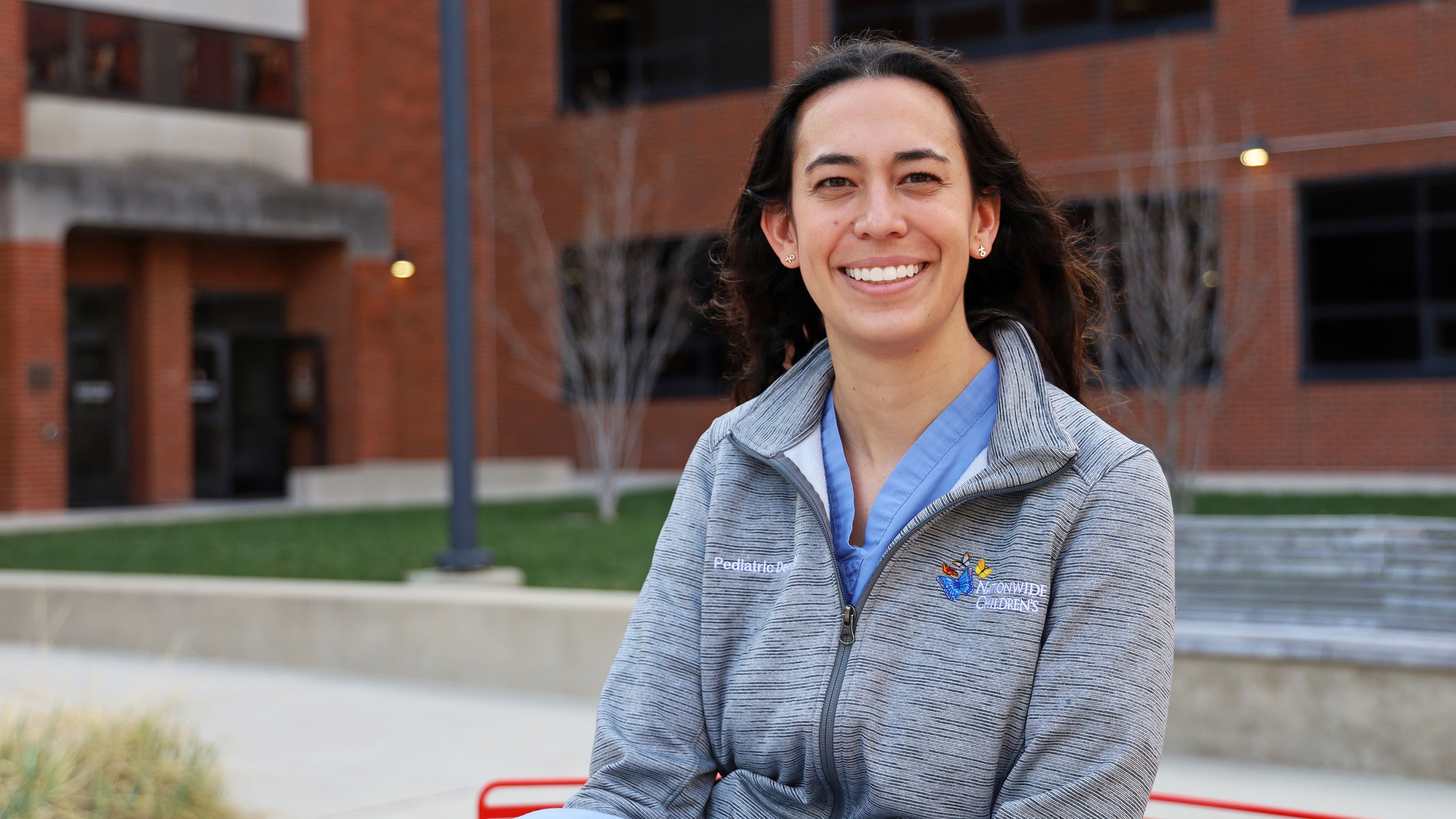
Vulnerable adults who need specialized oral health care often fall through the cracks after childhood, struggling to find dentists equipped to meet their complex needs. As a dual degree student in the MPH-Program for Experienced Professionals and Master of Science in Pediatric Dentistry programs, Julia Jagannath aims to fill this gap.
Jagannath shares how her experiences as a dentist drive her passion for public health.
Question:
What inspired you to become a pediatric dentist?
I always thought I would be a general dentist who cared for adults with special health care needs. My passion is rooted in solving barriers to care for vulnerable populations — I noticed a significant gap in dentistry when it came to patients with special health care needs as they transitioned from pediatric to adult dental care. Most adults with special health care needs never successfully make the transition and often remain with their pediatric dentist.
I decided to pursue a pediatric dental residency to gain expertise in caring for pediatric patients with medical and behavioral complexities to better tackle the transition of care and provide general dentists with the tools necessary to fill the gap.
Question:
How have your experiences as a dentist fueled your interest in public health?
Many adults with special health care needs are unable to manage their oral health due to physical and behavioral limitations and are also unable to find a general dentist who feels comfortable caring for them. This may be due to general dentists' lack of comfort caring for this patient population, inadequate office supplies or not accepting their insurance.
Public health initiatives could include changing the policies around Medicaid reimbursement rates, improving education and training for medically and behaviorally complex patients, and creating incentives to care for this patient population.
Clinical care, as meaningful as it is, has a ceiling. Public health initiatives feel limitless.
Question:
How has what you’ve learned through your public health education shaped the way you approach your work?
This MPH program has provided a better understanding of how U.S. health care systems work. I now have a better understanding of hospital administrators' roles, government influences in health care, policies, competition interests and health care financial limitations. All these aspects highlighted why change can be so challenging.
What has stuck with me the most is the ripple effect of leadership decisions. When those in power lose sight of their responsibility to serve communities, patients can go without care, systemic racisms sadly flourishes and individuals suffer — specifically children. Public health has the duty to protect those around us.
Question:
What do you enjoy most about being an MPH student?
I enjoy being exposed to a variety of individuals who are also enrolled in the program. It's been fun to learn about each of their different goals and read about their perspective on discussion prompts. We all have so much to learn from one another and the different perspectives are refreshing.
Question:
What are your goals for the future?
I would love to work in a private practice dental clinic while serving as a part-time dental faculty in a pre-doctoral institution. My goal would be to help navigate different education reforms with hopes of improving transition of care…by training the next set of general dentists.
About The Ohio State University College of Public Health
The Ohio State University College of Public Health is a leader in educating students, creating new knowledge through research, and improving the livelihoods and well-being of people in Ohio and beyond. The College's divisions include biostatistics, environmental health sciences, epidemiology, health behavior and health promotion, and health services management and policy. It is ranked first in Ohio, and 26th among all colleges and programs of public health in the nation by U.S. News and World Report. Its specialty programs are also considered among the best in the country. The MHA program is ranked 5th, the epidemiology specialty is ranked 21st, the health policy and management specialty is ranked 22nd and the biostatistics specialty is ranked 23rd.