Public Health Buckeyes: Zac St. Martin
MHA student inspired to help people stay in their homes, communities
By Kristen Mitchell
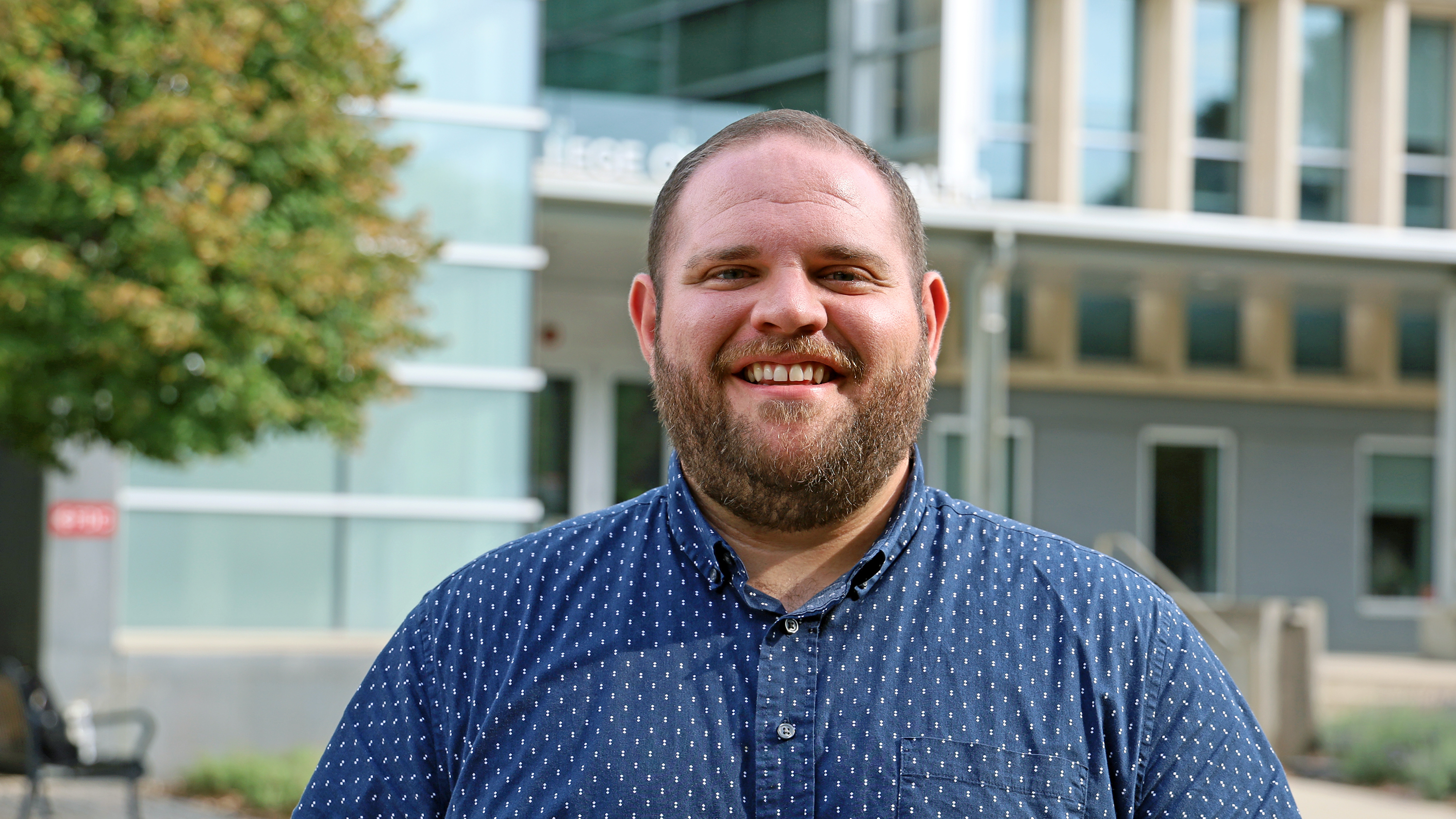
Master of Health Administration student Zac St. Martin’s passion for public health stems from his time working with people managing complex health conditions. It was rewarding to help people one-on-one, but he realized he could expand his reach by improving the systems that shape health outcomes.
Question:
What inspired your interest in healthcare administration?
After my undergraduate studies I worked in care coordination, building community programs to help patients with complex chronic conditions navigate social determinants of health and clinical care.
This work expanded into a hospital readmission prevention program with a major health system during the COVID-19 pandemic. Leading that initiative showed me the power of serving as the administrative glue — bringing physicians, clinical teams and community partners together to solve high-stakes operational problems. That experience inspired my commitment to healthcare administration.
Question:
What public health topics are you most passionate about?
I am most passionate about tackling social determinants of health to make care more equitable, specifically by improving the operational systems behind care transitions.
Working one-on-one with patients and families in their homes was deeply meaningful. I saw firsthand how everyday hurdles like missing a ride, affording groceries or understanding discharge instructions lead to avoidable readmissions.
While that individual work was rewarding, it revealed the limits of helping just one person at a time. Teaming with physicians and nurses in the hospital showed me that, when acute care operations align with community realities, we can remove these friction points at scale, keeping people out of the hospital and where they’d rather be: in their homes and community.
Question:
Is there anything about the MHA program that has surprised you?
Two things really stick out to me about our MHA program: the relevance to the real world and the culture.
I work part-time in the Department of Radiology in the College of Medicine and it feels like every week we learn something in our finance or operations management course that I can apply directly to a project at work. My previous academics have been very theoretical, but Ohio State’s MHA program is extremely relevant and applicable to modern healthcare administration and management.
I have also been very surprised by the warmth and approachability of our MHA leadership and faculty, as well as the support of the broader MHA alumni and Columbus-area healthcare administration professionals.
Question:
What do you enjoy most about being a CPH student?
At the end of the day, a hospital or physician practice is a business. The MHA program gives us the tools to run these types of businesses, but being educated to do so in a College of Public Health helps us maintain a broader vision of how these organizations can best serve the greater good and population health overall.
As a CPH student, attending extracurricular public health lectures and getting to take classes with other CPH students in an interdisciplinary manner will surely help us keep this perspective and make us more well-rounded leaders in healthcare administration.
Question:
What advice do you have for future MHA students?
If something interests you, say yes. If something scares you, then definitely say yes. Your schedule will work itself out, and you probably won’t have this opportunity to dedicate so much time to your education and development again.
About The Ohio State University College of Public Health
The Ohio State University College of Public Health is a leader in educating students, creating new knowledge through research, and improving the livelihoods and well-being of people in Ohio and beyond. The College's divisions include biostatistics, environmental health sciences, epidemiology, health behavior and health promotion, and health services management and policy. It is ranked first in Ohio, and 26th among all colleges and programs of public health in the nation by U.S. News and World Report. Its specialty programs are also considered among the best in the country. The MHA program is ranked 5th, the epidemiology specialty is ranked 21st, the health policy and management specialty is ranked 22nd and the biostatistics specialty is ranked 23rd.