Researchers ask: Why do students drop out of STEM programs?
Fulbright collaboration brings together U.S., Brazil experts
By Kristen Mitchell
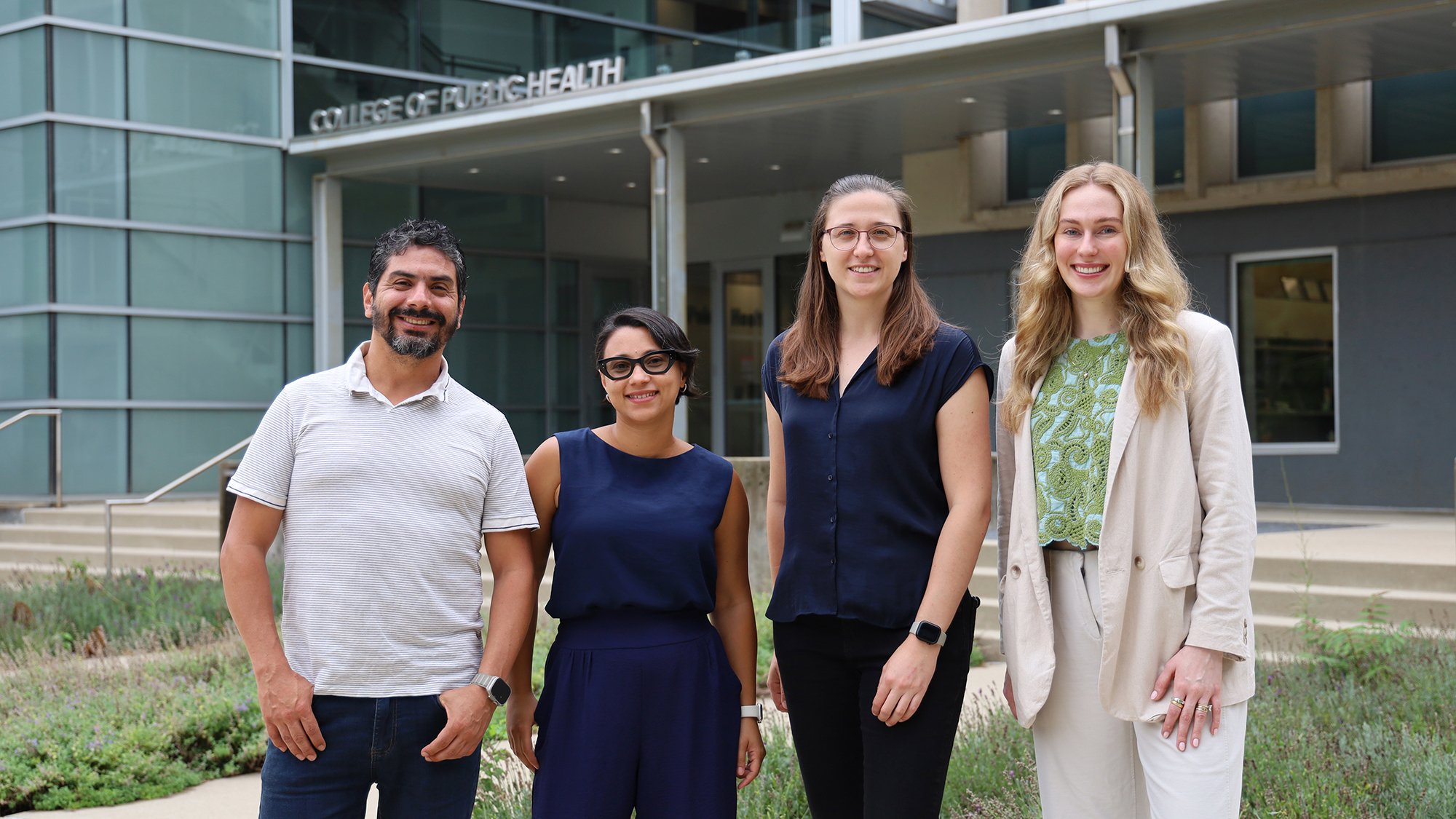
Assistant Professor Fernanda Schumacher welcomed a team of international research collaborators to Ohio State University’s campus as part of a project to better understand undergraduate student dropout rates in Brazil and support student success.
The team’s work is supported by a Jacob Palis Award, a joint initiative from the Fulbright Commission in Brazil and the Brazilian Academy of Sciences to promote international research collaboration.
With a focus on STEM programs, researchers are developing innovative statistical modeling to analyze data from the Brazilian Higher Education Census to understand why students drop out, particularly during the first year of their undergraduate programs.
Because of privacy protections, the Brazilian Higher Education Census only releases data at the program level, not for individual students, Schumacher said, meaning the usual statistical tools built for student-level data are not applicable here.
“There is a lot of room to develop approaches suited to this kind of data,” she said. “I am excited about this project because it lets us build those methods and turn them into insights that help identify where students are most at risk of leaving STEM programs early, so institutions can act before it is too late.”
This project is led by Assistant Professor Renata Rojas Guerra from Universidade Federal de Santa Maria (UFSM). Additional collaborators include Tatiane Fontana Ribeiro and Professor Fernando Peña-Ramírez from UFSM, and Assistant Professor Rachel Figard from the University of Georgia.
This two-year award supports reciprocal annual research visits designed to bolster collaboration. The team seeks to establish a long-term research partnership and promote educational equity and excellence in the U.S. and Brazil. The team’s different backgrounds and expertise strengthen their work, Schumacher said.
“Having the chance to work through all of this together in person this summer, rather than only over scattered video calls, made a real difference,” Schumacher said. “It is one thing to compare datasets on a screen and another to sit down together and work out what the numbers actually mean."
About The Ohio State University College of Public Health
The Ohio State University College of Public Health is a leader in educating students, creating new knowledge through research, and improving the livelihoods and well-being of people in Ohio and beyond. The College's divisions include biostatistics, environmental health sciences, epidemiology, health behavior and health promotion, and health services management and policy. It is ranked first in Ohio, and 26th among all colleges and programs of public health in the nation by U.S. News and World Report. Its specialty programs are also considered among the best in the country. The MHA program is ranked 5th, the epidemiology specialty is ranked 21st, the health policy and management specialty is ranked 22nd and the biostatistics specialty is ranked 23rd.